
Table of Contents
For many visitors, Westminster Abbey first appears as one more great historic attraction: a magnificent building full of tombs, monuments, royal stories and famous names.
For Londoners, the building often feels different. It is not simply a place where history is displayed. It is a working royal church where major ceremonies, services and national moments still happen. Westminster Abbey describes itself as “a place for worship, celebration and ceremony”, and it has been Britain’s coronation church since 1066.
That is why, if you are choosing your first great historic interior in Britain, this is the one we would normally place first.
Why start with Westminster Abbey?
If you want to understand the ceremonial, royal and symbolic heart of Britain, Westminster Abbey is one of the strongest possible starting points.
The site has more than a thousand years of history. Edward the Confessor’s church was consecrated in 1065, and the present building dates mainly from the rebuilding begun by Henry III in 1245. The Abbey has hosted 39 coronations since 1066, contains around 3,300 burials, and holds one of the country’s richest concentrations of royal, political, literary and scientific memorials.
It is also difficult to understand Westminster without understanding the Abbey. The Abbey, the royal palace next door, and later the institutions of Parliament and state all grew together in this area. Even the Chapter House of the Abbey played a role in the early history of Parliament, with the King’s Great Council assembling there in 1257 and the House of Commons meeting there for a time in the 14th century. That broader history is one reason this tour works so well as an introduction to Britain itself.
What makes this tour different
This is not a rushed stop or a quick sweep through a famous church.
Our standalone Westminster Abbey Tour is the fuller version of the Abbey experience. It is longer and more complete than our combined Westminster Abbey + Westminster Walk format. If you want to focus properly on the church itself rather than split your time between the Abbey and the surrounding district, this is the page you need.
The usual duration is around three to three and a half hours, depending on pace, crowd levels and the interests of your group.
What you will see inside
A well-structured Abbey tour usually includes the main spaces and the main stories that make the building so important.
That normally includes the nave, the grave of the Unknown Warrior, the great royal and national memorials, the quire, the High Altar, the Shrine of St Edward the Confessor, the royal tombs around the shrine, and Henry VII’s Lady Chapel. The Abbey’s own history pages note that the shrine of Edward the Confessor survives behind the High Altar, while the Lady Chapel is the burial place of fifteen kings and queens, including Elizabeth I, Mary I and Mary, Queen of Scots.
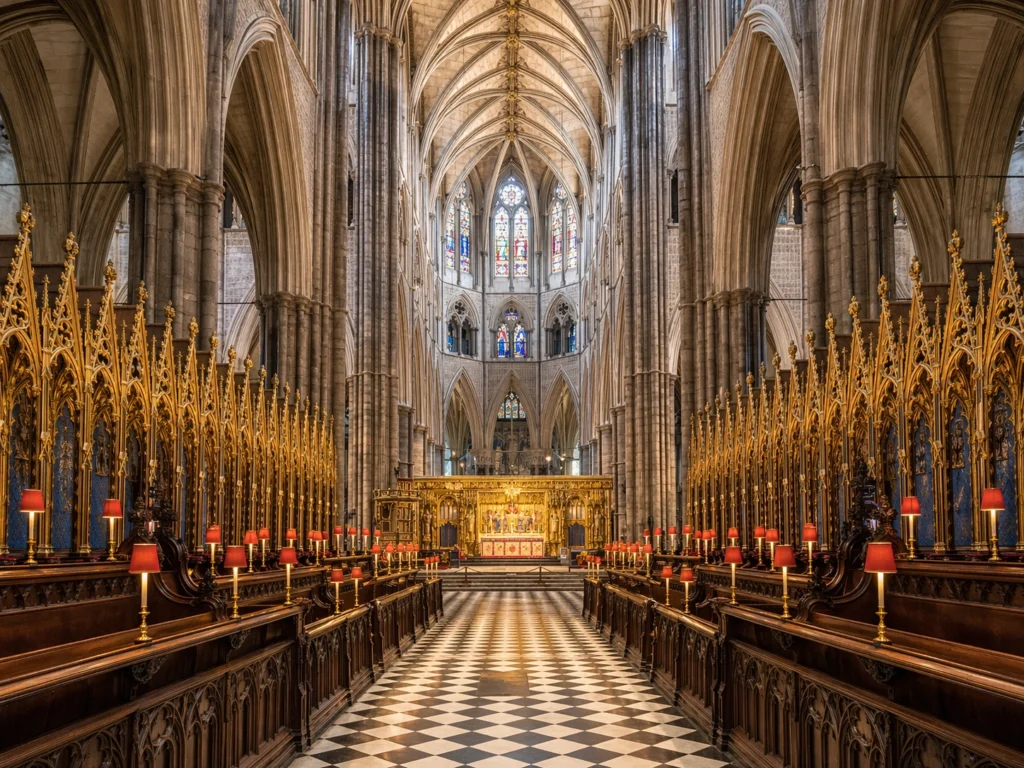
You will also encounter major names such as Isaac Newton and Charles Darwin, both buried in the Abbey, and many visitors are especially struck by the way scientific fame, royal history, poetry, war memory and Christian worship all sit in the same building. Westminster Abbey also notes that the grave of the Unknown Warrior, close to the west door, has become a place of pilgrimage.
One of the great highlights is the Coronation Chair. It was made in 1300–1301, has been central to coronation ceremonies for over 700 years, and Westminster Abbey describes it as the oldest piece of furniture in the United Kingdom still used for its original purpose.
Another highlight many people miss without a guide is the Abbey’s extraordinary historical layering. Near the west end hangs the celebrated portrait of Richard II, which the Abbey describes as the earliest known portrait of an English monarch, dating from the 1390s. In the passage to the Chapter House you can also see what the Abbey identifies as Britain’s oldest door, made in the 1050s.
Meeting point
Our standard meeting point for this tour is outside the Westminster Abbey Shop, which is the easiest and most reliable meeting point for private visitors. The Abbey’s Main Shop is officially listed at Broad Sanctuary, London SW1P 3JS, and the shop opens from 9:15 am.
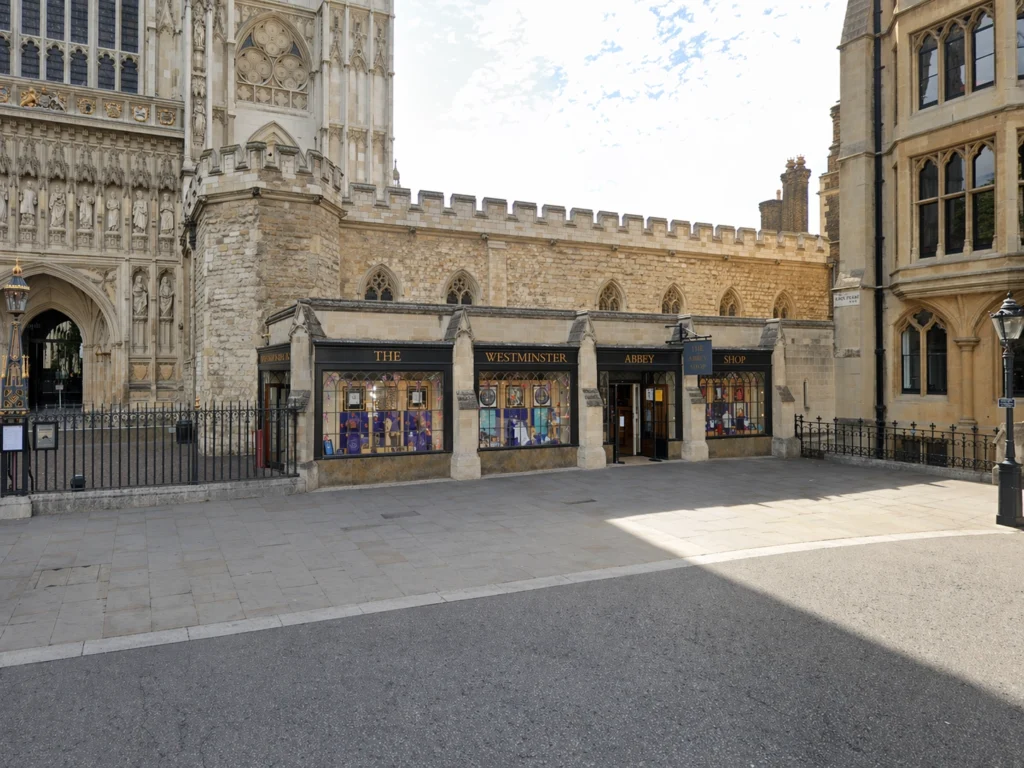
We normally ask guests to arrive about ten minutes before the start time.
If your hotel is in Mayfair or Belgravia, we can sometimes arrange for the guide to meet you at the hotel first and travel with you by taxi to the Abbey, but this must be requested in advance and the taxi is paid separately.
Start times
Because Westminster Abbey is a working royal church, timing matters.
The Abbey is generally open to visitors 9:30 am–3:30 pm Monday to Friday and 9:30 am–3:00 pm on Saturday. On Sunday it is open for services, not standard sightseeing. The Abbey also warns that, as a working church, it sometimes closes or operates reduced visiting hours for special services.
For this reason, our preferred standalone tour timings are:
- Morning: usually 9:30 am or 10:00 am
- Afternoon: usually 2:00 pm or 2:30 pm
- 3:00 pm may sometimes be possible on certain weekdays, but should not be treated as a standard slot for every day, especially not on Saturdays
That is also consistent with the Abbey’s official group entrance pattern for Blue Badge groups: 9:30 am–12:00 pm and 1:00 pm–3:00 pm on weekdays, and 9:00 am–2:30 pm on Saturdays.
Blue Badge guides only
This point is very important.
Westminster Abbey states that only authorised Blue Badge Guides are permitted to guide inside the Abbey for private groups, and that groups led by Blue Badge Guides must use the Abbey’s group arrangements and timed group entrance. The Abbey also states that one Blue Badge Guide may lead a maximum of 20 people, and groups larger than that must be split or entry will be refused.
That is why this tour must be organised in advance.
We arrange the entry tickets for you and match the booking to an authorised Blue Badge Guide. This is also why we recommend booking as early as possible: Abbey operating hours can change, and the best guides are never more available at the last minute than they are well in advance.
Group size and Tour Guide Systems
The Abbey’s official group ratio is one Blue Badge Guide per maximum of 20 people. If your party is larger than that, we will split the booking into multiple groups and additional guide fees will apply.

For groups of around six or more, we strongly recommend adding our Tour Guide Systems. Westminster Abbey can be busy, especially in peak season, and earpiece systems make a noticeable difference to comfort and audibility. We supply our own systems and can add them to your invoice.
Accessibility
Westminster Abbey states that the Abbey is accessible for wheelchair users, that wheelchairs are available to borrow from a marshal, and that accessible toilets are located in the Cloisters. The Abbey also offers a hearing loop system, audio-described tours and a British Sign Language multimedia option.
That said, this is still an ancient building with thresholds, changing floor levels and areas where you need to watch your footing carefully. We therefore ask all guests to move carefully, especially around steps, uneven stone and crowded sections.
If anyone in your group has accessibility requirements, tell us in advance and we will structure the visit as carefully as possible.
Photography and visitor etiquette
Westminster Abbey now allows personal photography in much of the church, but not during services or live performances, and not in the Shrine of St Edward the Confessor, St Faith’s Chapel, or the Queen’s Diamond Jubilee Galleries. Video recording, flash, extra lighting, selfie sticks and tripods are not permitted.
We also ask guests to remember that this is a church, not only a visitor attraction. Please follow all instructions from Abbey staff and your guide, and do not touch monuments, tombs, furniture or historic fabric unless clearly permitted.
Because the Abbey remains a place of worship, tourist flow may occasionally pause for services, prayers or operational announcements. That is part of the reality — and part of the meaning — of visiting a living royal church rather than a closed museum.
Children and families
Children can absolutely enjoy this tour, but the right pacing matters.
For adults, the full three to three-and-a-half-hour version works very well. For families with younger children, we often recommend either:
- a shortened Abbey-focused version, or
- our Westminster Abbey + Westminster Walk combination, which breaks the visit more naturally.
Can this be combined with other visits?
Yes — and Westminster Abbey is one of the easiest major sites to combine intelligently.
The combinations that usually make the most sense are:
- Westminster Abbey + Westminster Walk
- Westminster Abbey + National Gallery
- Westminster Abbey + National Portrait Gallery
- Westminster Abbey + St Paul’s Cathedral
- Westminster Abbey + Tate Britain
- in some cases, Westminster Abbey + Tower of London, usually with a river transfer afterwards
We do not usually recommend pairing Westminster Abbey with the British Museum on the same day unless you specifically want a very heavy full-day cultural programme. The British Museum is large and mentally demanding, and most guests enjoy both sites more if they are not stacked together.
Optional additions
There are a few optional extras worth knowing about.
The Abbey also offers Verger-guided tours, which last about 90 minutes and include access to the Shrine of St Edward the Confessor, which is not generally open to ordinary visitors in the same way. These tours are run by the Abbey itself, in English only, and can only be booked on arrival rather than through that phone line in advance.
The Queen’s Diamond Jubilee Galleries are a separate timed-ticket experience above the Abbey floor, open Monday–Friday 10:00 am–3:00 pm (last entry) and Saturday 9:30 am–3:00 pm, and closed on Sunday. They require an additional ticket on top of Abbey admission.
We can discuss either of these as upgrades if you would like a more specialist Abbey day.
Booking process
This tour must be booked in advance.
That is because:
- the Abbey is a working church with changing operational hours;
- guided group access is timed;
- only authorised Blue Badge Guides may guide private groups inside;
- and entry tickets need to be secured properly in advance.
Once you send the enquiry, we confirm the date, start time, ticket structure and guide availability, then issue the invoice.
Final thought
If you only do one great historic interior properly in London, Westminster Abbey is one of the strongest arguments for being that choice.
It is not just full of British history. It is one of the places where British history still keeps happening.
Complete the enquiry form below to request your private Westminster Abbey Tour.
FAQ
Is Westminster Abbey really the best first historic interior in London?
In our view, yes. If you want monarchy, ceremony, burials, national memory and the story of Westminster in one place, it is exceptionally hard to beat.
How long is the standalone Westminster Abbey Tour?
Usually around three to three and a half hours.
Where do we meet the guide?
Outside the Westminster Abbey Shop, Main Shop, Broad Sanctuary, London SW1P 3JS.
What time should we start?
We normally recommend 9:30 am or 10:00 am in the morning, and 2:00 pm or 2:30 pm in the afternoon. A 3:00 pm start may sometimes work on certain weekdays, but it is not a safe standard slot for every day.
Is the Abbey open on Sundays for sightseeing?
No, not for normal tourist visiting. On Sunday it is open for services.
Can any guide take us inside Westminster Abbey?
No. The Abbey states that only authorised Blue Badge Guides may guide private groups inside.
How many people can one guide take?
A maximum of 20 people per Blue Badge Guide. Larger groups must be split.
What are the main highlights inside?
For most guests: the Coronation Chair, the Unknown Warrior, the Shrine of St Edward the Confessor, the royal tombs, Henry VII’s Lady Chapel, and major burials such as Newton and Darwin.
How old is the Coronation Chair?
It was made in 1300–1301 and has been central to coronations for over 700 years.
Are Elizabeth I and Mary, Queen of Scots buried there?
Yes. Both are in Henry VII’s Lady Chapel. The same chapel also contains Mary I and other kings and queens.
Is there really Britain’s oldest door in the Abbey?
Yes. Westminster Abbey says Britain’s oldest door is in the passage leading to the Chapter House and dates to the 1050s.
Is photography allowed?
Generally yes for personal use, but not during services, and not in the Shrine of St Edward the Confessor, St Faith’s Chapel, or the Queen’s Diamond Jubilee Galleries. Flash, video, selfie sticks and tripods are not permitted.
Is Westminster Abbey accessible for wheelchair users?
Yes, the Abbey states that it is accessible for wheelchair users, and accessible toilets are in the Cloisters.
Can this tour be combined with something else the same day?
Yes. The most natural pairings are Westminster Abbey + Westminster Walk, or Westminster Abbey with the National Gallery, National Portrait Gallery, St Paul’s Cathedral or Tate Britain.