Table of Contents
For lovers of painting, antiques, interiors and France, the Wallace Collection is one of London’s true jewels.
It is also one of those museums that Londoners return to again and again. The reason is simple: it is beautiful to be in. The rooms are warm, elegant and deeply atmospheric. The building still feels like a great house rather than an institutional museum. The collection is rich without being exhausting. And unlike some of London’s more crowded headline museums, the Wallace Collection often feels calm, civilised and genuinely enjoyable at the level of lived experience.
The museum itself describes the Wallace Collection as a national museum in an historic London town house, displaying the works of art collected by the first four Marquesses of Hertford and Sir Richard Wallace. It was bequeathed to the British nation by Lady Wallace in 1897 and opened to the public in 1900 at Hertford House in Manchester Square. The collection is especially known for French 18th-century painting, furniture and porcelain, important Old Master and 19th-century paintings, and one of the finest collections of princely arms and armour in Britain.
Why the Wallace Collection matters
The Wallace Collection stands a little apart from London’s other major museums.
It is not as encyclopaedic as the British Museum, not as monumental as the National Gallery, not as civic in tone as Tate Britain, and not as internationally headline-driven as Tate Modern. That is exactly its strength. It feels more personal, more domestic, more intimate and more refined.
The collection was built up across the 18th and 19th centuries by the first four Marquesses of Hertford and Sir Richard Wallace, and that long collecting history still shows in the taste of the rooms. This is not a museum assembled by committee. It is a collection shaped by elite private collecting and then preserved with remarkable coherence. The Wallace Collection’s own history pages emphasise this continuity and the importance of Hertford House as the former principal London residence of its owners.
That is why the museum gives something rare in London: not only objects, but a feeling for how a highly privileged, highly cultivated world wanted to live with art.
Why book this tour with a guide?
Because the Wallace Collection is one of those places that can look simply “beautiful” without a guide, but becomes much more meaningful with one.
Without a guide, many visitors enjoy the atmosphere, the colour of the rooms, the richness of the furniture, the glamour of the French works and the comfort of the house. With a guide, the museum opens further: the collecting taste becomes legible, the French 18th-century material becomes more pointed, the armoury becomes more than decorative metal, and the paintings begin to speak to each other.
This is especially valuable because the Wallace Collection is unusual. It is neither a pure picture gallery nor a pure historic house nor a pure decorative arts museum. It is a synthesis of all three.
What makes it special
The Wallace Collection’s own official descriptions highlight several core strengths:
- 18th-century French painting
- Old Masters
- furniture
- porcelain
- one of Britain’s finest princely arms and armour collections
That means the tour is unusually varied. In one museum, you can move from painting to decorative arts, from intimate interiors to martial display, from French rococo elegance to major portraiture and Old Master drama.
For many visitors, that variety is exactly what makes the place memorable.
What you will see
A strong Wallace Collection tour usually includes a carefully chosen route through the great house interiors and the most rewarding highlights of the collection.
Depending on your interests, that often includes:
- the great house setting of Hertford House
- major French 18th-century works
- selected Old Masters
- the museum’s distinguished arms and armour
- decorative arts, furniture and porcelain
- the most famous signature paintings
- the great interior rooms themselves, including the museum’s most atmospheric spaces
The museum is officially displayed in 25 galleries, which gives some sense of scale: it is not a tiny house museum, but it is still far more intimate than London’s largest institutions.
Highlights of the collection
Fragonard’s The Swing
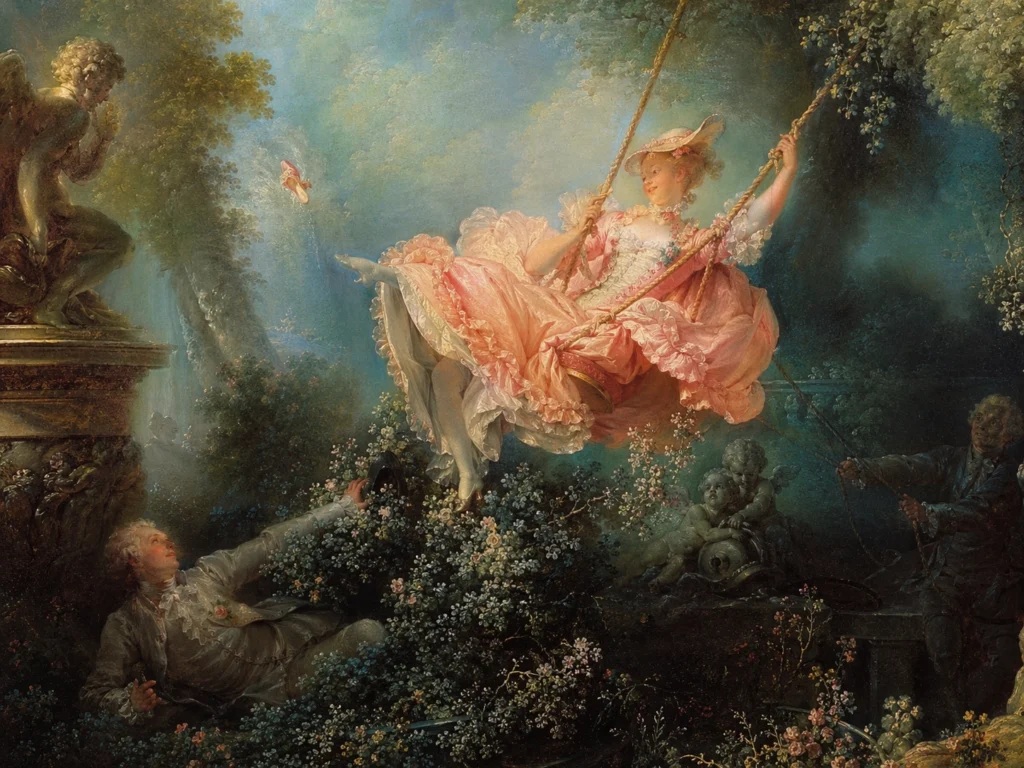
One of the best-known works in the museum is Fragonard’s The Swing, a painting so famous that the Wallace Collection has created dedicated interpretive material around it. The museum describes it as one of the most famous French paintings in existence, and notes that it was purchased by the 4th Marquess of Hertford in 1865. The painting underwent conservation in 2021, after which its colours returned with renewed brilliance.
Frans Hals’s The Laughing Cavalier
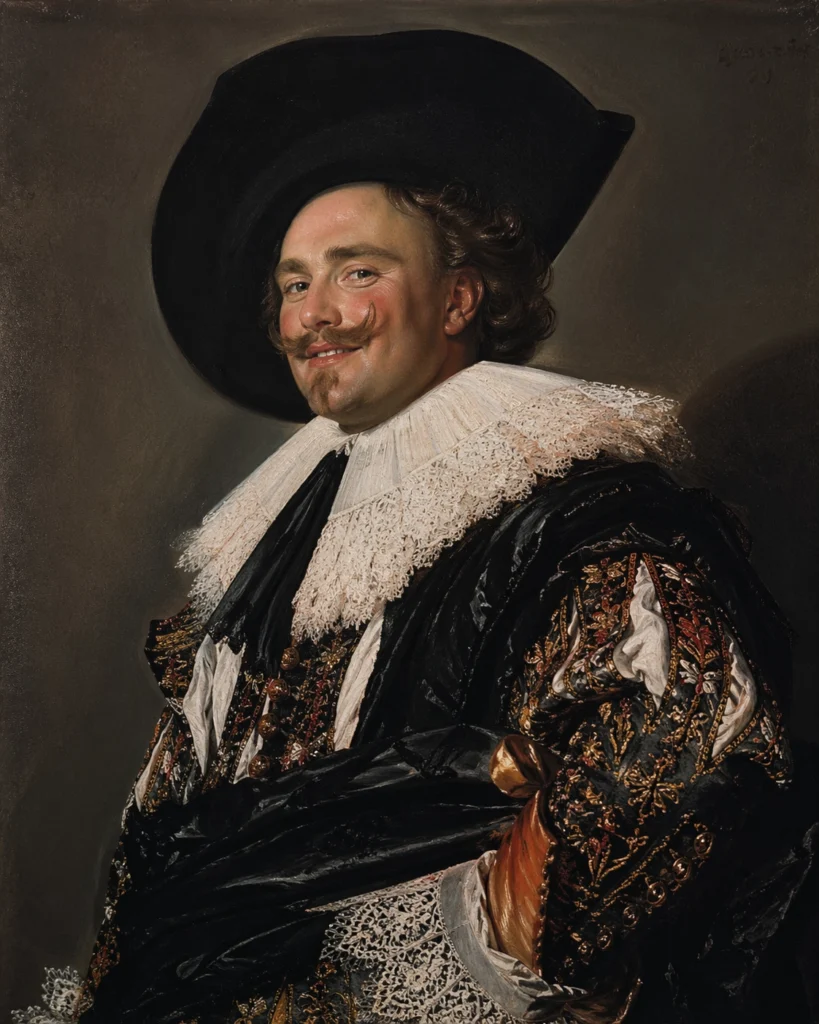
This is one of the great crowd-pulling pictures of the collection and one of the images most strongly associated with the museum. The Wallace Collection’s visitor updates even refer to temporary room closures that affect the display location of The Laughing Cavalier, which shows just how central it remains to the museum’s identity.
Arms and armour

The Wallace Collection and the UK government both emphasise the museum’s armoury as one of its defining strengths. This is not a side collection. It is one of the great arms and armour holdings in Britain, and for some visitors it becomes one of the most memorable parts of the visit.
French decorative arts
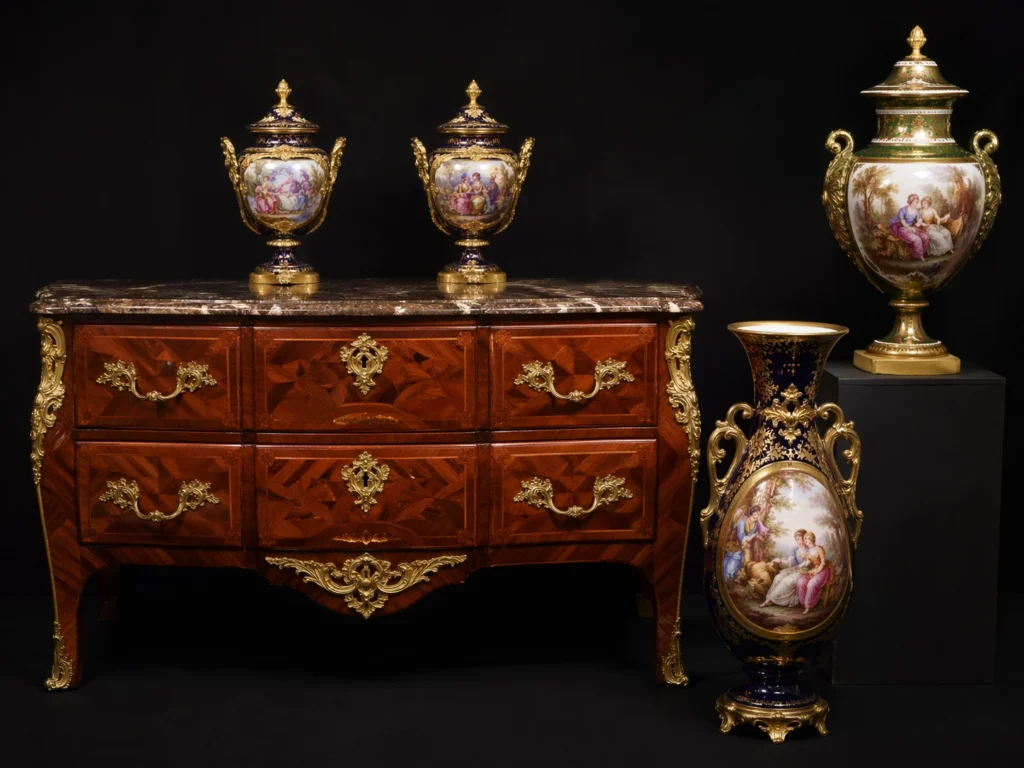
Furniture, porcelain and French 18th-century taste are essential to the experience here. This is one of the places in London where visitors can most vividly feel the connection between painting, interiors, social performance and aristocratic collecting.
Why this museum feels different from the others
This museum is closer in spirit to a lived aristocratic environment than to a public civic gallery.
That is one reason it can be so seductive. You are not just moving through neutral museum halls. You are moving through a former London townhouse in which collecting, hospitality, display and status once belonged together. The government’s description of the museum explicitly calls attention to the fact that the collection is presented at Hertford House “in a sumptuous but approachable manner”, which captures the appeal very well.
This is also why some visitors compare it in spirit to places such as Apsley House or Sir John Soane’s Museum, even though the Wallace Collection is distinct in tone and collection profile.
Duration
The standard tour lasts around two hours.
That is long enough to do the museum properly without turning the visit into visual overload. This is one of the easiest cultural visits in London to enjoy in a concentrated format. It is rich, but not exhausting.
Start times
The Wallace Collection states that it is open daily from 10.00–17.00, with free entry to the permanent collection.
Our standard guided tour timings are therefore:
- 10:00 am — morning slot
- 2:00 pm
- 2:30 pm
- 3:00 pm — afternoon slots
Because this museum is relatively gentle in pacing, both morning and afternoon work well.
Meeting point
Our standard meeting point is outside the main entrance to the Wallace Collection.
The museum’s official address is:
The Wallace Collection
Hertford House
Manchester Square
London W1U 3BN
We send the exact pin after booking.
Entry and exhibitions
Entry to the permanent collection is free and unticketed. The Wallace Collection’s access page says there is no need to queue for entry to the main collection, though temporary exhibitions are separately ticketed. It also notes that there can sometimes be short queues for the café, restaurant and shop.
If a temporary exhibition is on during your dates, we can discuss it with you in advance. In many cases, the strongest structure is:
- guided visit through the permanent collection first
- then self-guided entry to the exhibition afterwards
That works especially well here.
Group size
Because the Wallace Collection is more intimate and room-based than the National Gallery or the British Museum, we recommend:
- up to 10 people: one guide
- above 10 people: split into multiple groups
That keeps the experience elegant and prevents the rooms from feeling crowded.
Tour Guide Systems
For groups of eight or more, we recommend our Tour Guide Systems.
The museum is calmer than some others, but the rooms are more compact, and audio systems still improve clarity and comfort when the party is larger.
We supply our own systems and can add them to your invoice.
Accessibility
The Wallace Collection has strong access provision.
Its official access page states that:
- the entrance is step-free
- there is a sloped driveway up to the front entrance
- the museum has a lift to all floors
- all public areas are accessible by wheelchair
- wheelchairs are available from the front desk
- public toilets are on the lower ground floor, including an accessible toilet
- most floors are firm and level, though the building is historic and some areas vary in lighting.
This means the museum is very well suited to wheelchair users and visitors with access needs.
Photography and visitor etiquette
The access page makes an important general point: much of the collection is on open display, not behind glass or ropes, and visitors are asked not to touch the objects because touching can cause unseen damage.
Photography for personal use is generally common in the museum, but, as always, if you want to photograph or film the guide closely, please ask the guide’s permission first.
Restaurant and café
One of the pleasures of the Wallace Collection is that it is a very good museum in which to pause.
The official access page explains that the restaurant and café are both in the same space — a terrace with a glass ceiling — and notes that it can be busy and noisy at times. This is the setting many visitors remember as part of the charm of the museum.
This makes the Wallace Collection particularly easy to turn into a slower, more civilised cultural stop rather than a hurried museum tick-box.
Who this museum is for
This museum is especially good for:
- lovers of painting
- visitors interested in French 18th-century taste
- guests who enjoy interiors and decorative arts
- collectors and antique enthusiasts
- repeat visitors to London
- people who want something more refined and less crowded than the city’s biggest museum institutions
It is usually less suitable for very young children unless they already enjoy art, interiors or historical objects.
Can this tour be combined with something else?
Yes — very well.
The most natural combinations are:
- Wallace Collection + National Gallery
- Wallace Collection + Apsley House
- Wallace Collection + Sir John Soane’s Museum
- Wallace Collection + a short nearby walk
Those combinations work particularly well because the Wallace Collection is two hours rather than three or more.
Booking process
This tour should be booked in advance.
That is because:
- the strongest guides for this museum are fewer than people assume
- temporary exhibitions may need separate planning
- larger groups may need to be split
- and we may want to tailor the emphasis toward painting, French decorative arts, armour, or the house itself
Once you send the enquiry, we confirm the date, start time and guide availability, then issue the invoice.
Final thought
The Wallace Collection is one of London’s most rewarding museums precisely because it does not try to overwhelm you.
It invites you in. It surrounds you with beauty. It feels domestic, aristocratic, cultivated and unexpectedly personal. For the right visitor, it is not just a museum stop — it becomes one of the places in London that lingers in the memory.
Complete the enquiry form below to request your private Wallace Collection Tour.
FAQ
Is entry to the Wallace Collection free?
Yes. The permanent collection is free and unticketed. Temporary exhibitions may be ticketed separately.
How long does the tour last?
Usually around two hours.
What are your standard start times?
Usually 10:00 am, 2:00 pm, 2:30 pm or 3:00 pm.
Where do we meet the guide?
Outside the main entrance to the Wallace Collection at Hertford House, Manchester Square, London W1U 3BN.
What is the Wallace Collection best known for?
For its outstanding French 18th-century art, important Old Masters, decorative arts, and one of the finest arms and armour collections in Britain.
Does the Wallace Collection have Fragonard’s The Swing?
Yes. It is one of the museum’s most famous paintings.
Does the Wallace Collection have The Laughing Cavalier?
Yes. It is one of the museum’s signature pictures. The museum’s own visitor notices refer to temporary room changes affecting it.
Is the museum wheelchair accessible?
Yes. The museum states that all public areas are accessible by wheelchair and that there is a lift to all floors.
Is there a café or restaurant?
Yes. The Wallace Collection has a restaurant and café in a glass-roofed terrace space.
Do you recommend Tour Guide Systems?
Yes, especially for groups of eight or more.
Should larger groups be split?
We usually recommend splitting groups above 10 people because the museum is more intimate and room-based.
Is this a good museum for children?
Usually not as a first-choice family museum for younger children, unless they already have an interest in art, interiors or historical objects.