Table of Contents
The British Museum is one of the great museums of the world — and also one of the easiest to do badly.
That may sound strange, but it is true. The Museum itself says it was founded in 1753, opened in 1759, and was the first national public museum of the world, created to cover all fields of human knowledge. Today it presents two million years of human history, art and culture.
That scale is exactly what makes it difficult.
In some museums, you can walk in, look around, and immediately connect with what you see. In a painting gallery, a picture may work on you visually before you know anything about it. In Westminster Abbey, the meaning of the place is legible even before the details are explained. In the Tower of London, the Crown Jewels, fortress walls and royal setting create an instant impression.
The British Museum is different. Here, objects often need context. Without that context, a masterpiece can remain just an object in a case.
That is why, on our site, the British Museum comes after Westminster Abbey, the Tower of London, the National Gallery and the National Portrait Gallery. It is not less important. In many ways it is even greater. But it is more intellectually demanding, and it rewards visitors far more when they arrive with a guide and with enough mental energy to take it in properly. The Museum is among London’s most visited attractions, and it explicitly recommends booking ahead for priority entry during busy periods.
Why this museum is different
The British Museum is not a museum of one country, one dynasty, one art form or one period.
It is a museum of human civilisation through objects.
That is why it can feel overwhelming. A guided visit helps turn the museum from a sequence of disconnected artefacts into a coherent story: how writing was deciphered, how empires represented themselves, how religion, power, ritual, trade and memory were carried in stone, metal, clay, glass and paint.
This is also why we do not usually recommend combining the British Museum with another major museum tour on the same day. It is a rich, serious visit, and most guests enjoy it more when it is the main event.
Why book this tour with a guide?
Because context matters here more than almost anywhere else.
A guide helps explain why:
- the Rosetta Stone changed the study of ancient Egypt;
- the Parthenon Sculptures matter so much artistically and politically;
- the Assyrian and Mesopotamian galleries are so powerful;
- Egyptian sculpture, mummies, coins, clocks, treasures and inscriptions are not random wonders, but part of larger civilisational stories.
The Museum itself highlights objects such as the Rosetta Stone, the Parthenon Sculptures, the treasures of Sutton Hoo and the Portland Vase among its most famous works.
Without guidance, visitors often remember only that the museum was large. With a good guide, they remember why particular things mattered.
What makes the British Museum so exceptional
The Museum’s collection is extraordinary because of both range and depth.
It contains major works from:
- ancient Egypt
- Assyria and Mesopotamia
- ancient Greece and Rome
- prehistoric and early medieval Britain
- Asia
- Africa
- the Islamic world
- and many other cultures and periods
Its building is also part of the experience. The Museum’s monumental Greek Revival building was designed by Sir Robert Smirke, with construction beginning in 1823 and the quadrangular building completed in 1852. The later Great Court — the glass-roofed central space around the Reading Room — was designed by Foster and Partners and opened in 2000. The Museum describes it as the largest covered public square in Europe.
So the visit has two layers:
- the architecture of the museum itself;
- and the objects it contains.
Main highlights of the tour
The exact route depends on your interests, the guide and current gallery conditions, but a strong British Museum tour usually includes several of the following.
The Rosetta Stone
This is the Museum’s single most famous object. The British Museum says it is one of the most famous objects in the Museum and explains that it was a crucial clue in learning to read Egyptian hieroglyphs. The inscription dates to 196 BC.
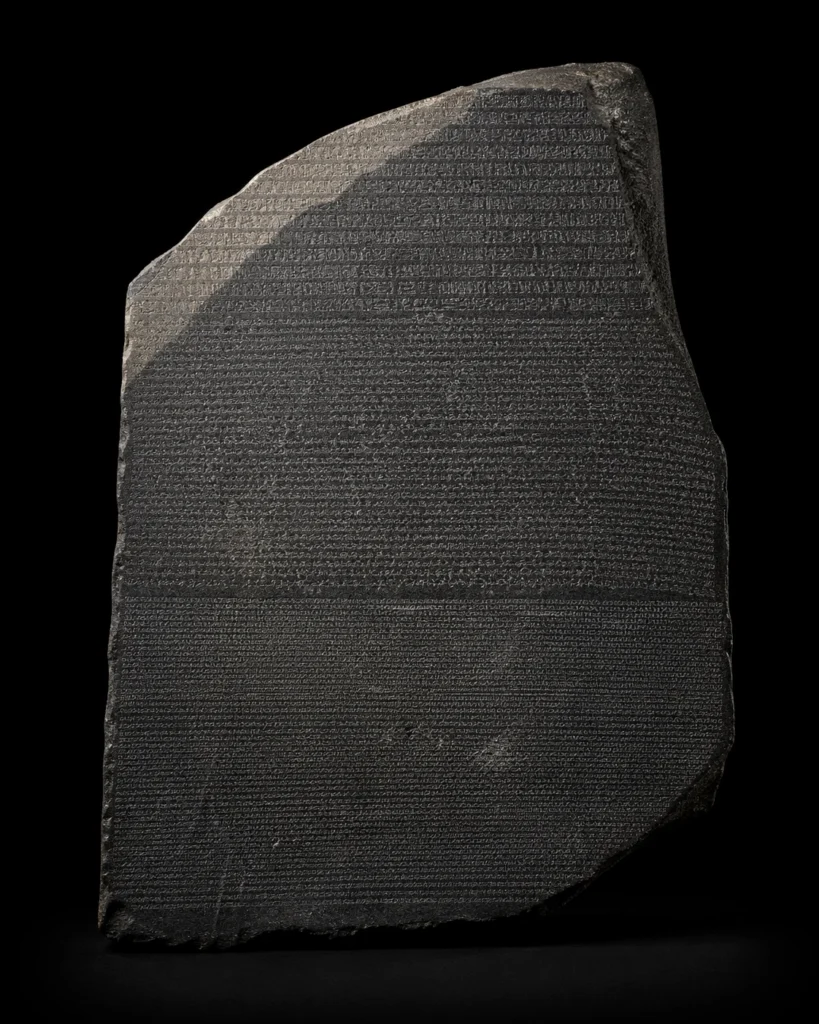
A stone on its own is just a stone. The Rosetta Stone with explanation becomes one of the great keys to human knowledge.
The Parthenon Sculptures
These are among the most important surviving sculptures from ancient Greece. The Museum explains that the Parthenon was the centrepiece of the Athenian Acropolis building programme, and that the sculptures now in Room 18 once decorated the outside of the temple.

They are artistically major, historically major, and still politically charged — one of the reasons they matter so much to visitors.
Egyptian galleries
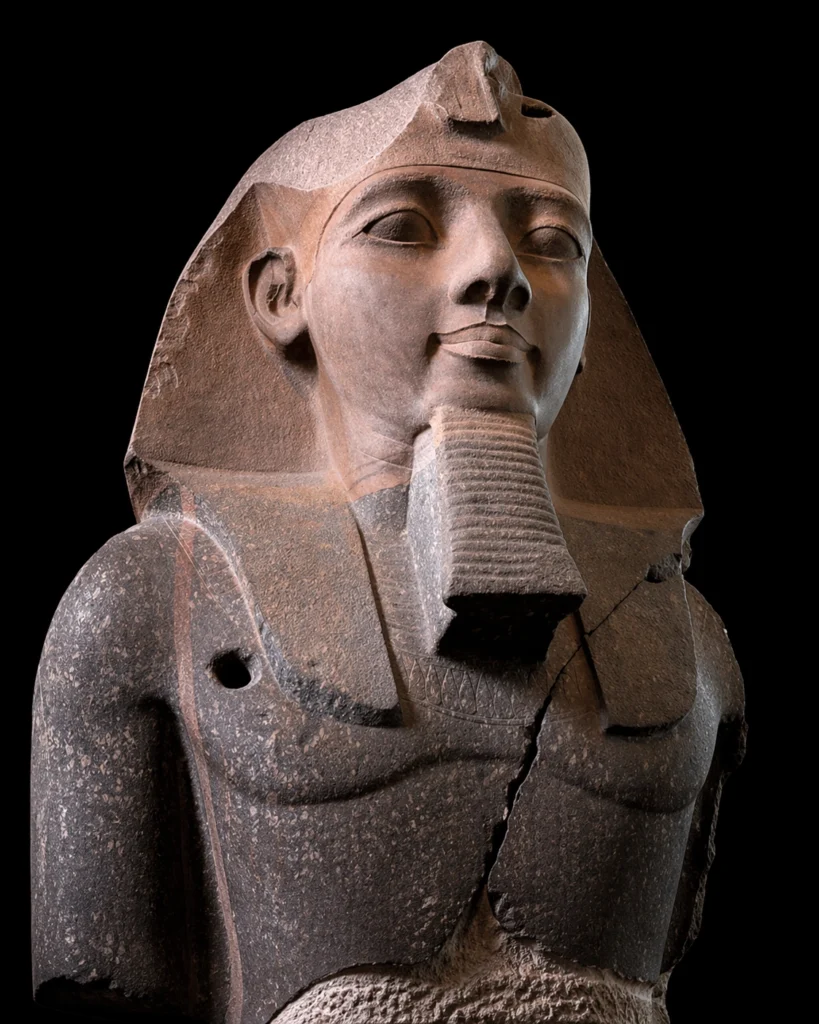
The Egyptian material is one of the great strengths of the Museum. Sculpture, inscriptions and funerary material all help build the long story of ancient Egypt beyond the Rosetta Stone alone. The Museum’s own trails treat the Rosetta Stone as part of the Egyptian sculpture sequence.
Mummies
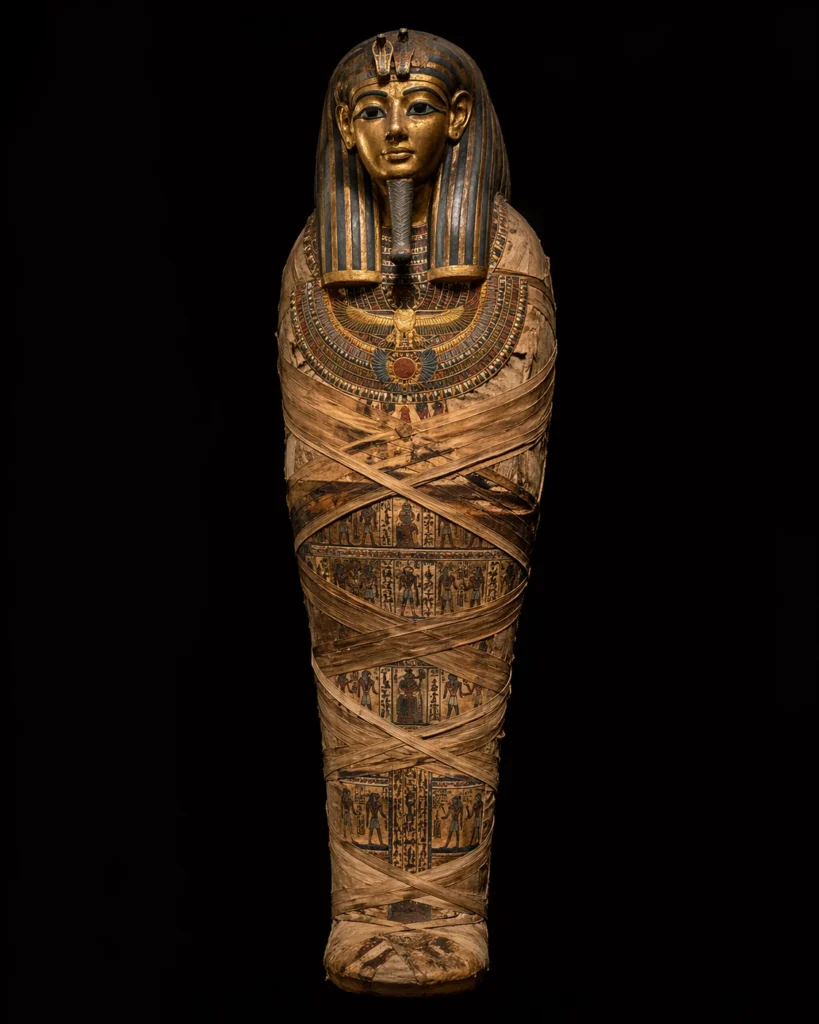
The Egyptian death and afterlife material is one of the parts of the Museum visitors ask about most. It is also one of the sections where a guide is especially useful beforehand, because it helps visitors understand what they are actually looking at rather than treating it only as a spectacle.
Assyria and Mesopotamia
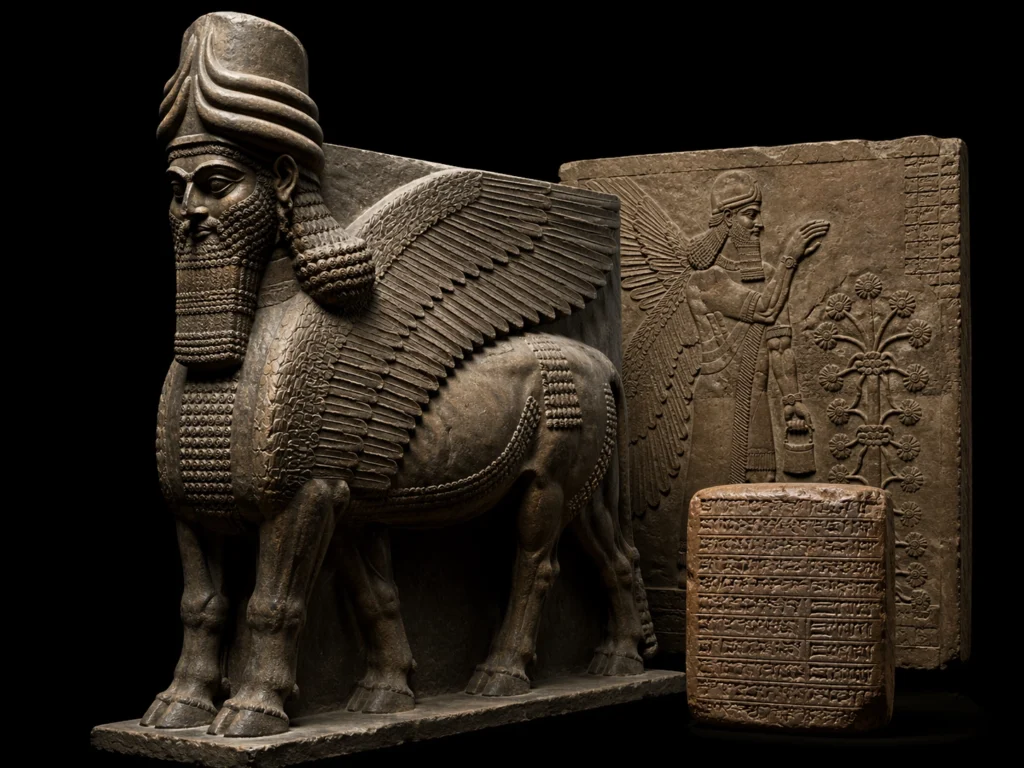
This is one of the most powerful parts of the Museum. Monumental reliefs, carved guardians and the broader Mesopotamian world can be deeply impressive, but they also need interpretation. Without that, people often pass quickly. With explanation, this becomes one of the strongest sections of the visit.
Sutton Hoo and early Britain
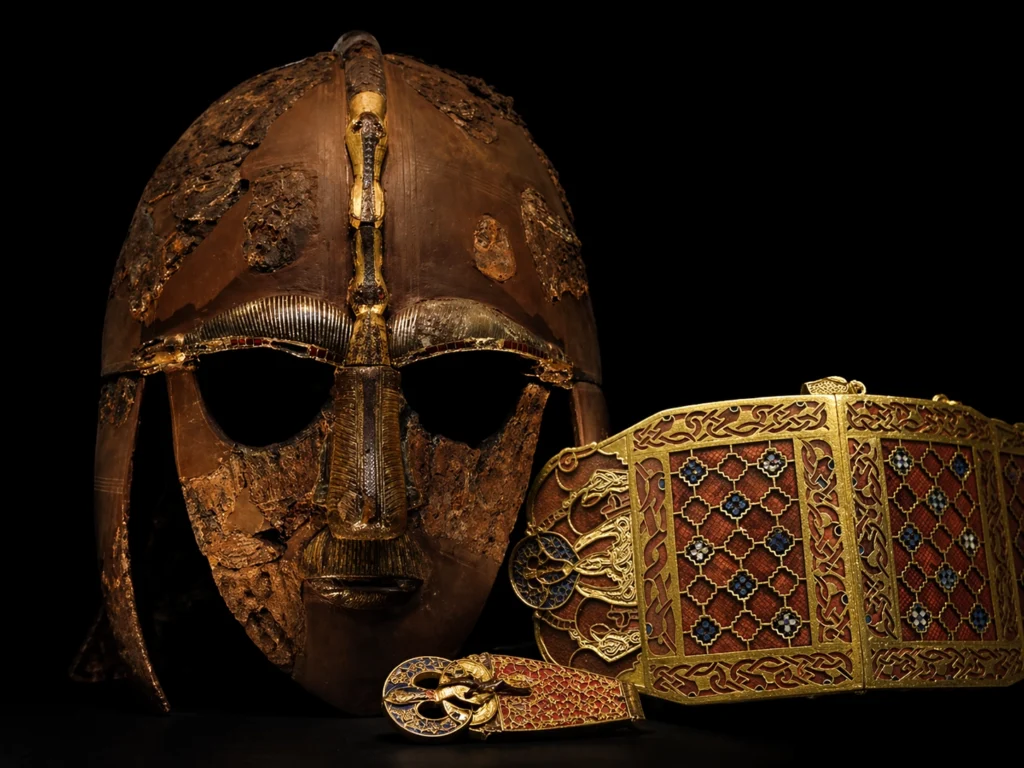
The Museum itself highlights the treasures of Sutton Hoo as one of its best-known collections. This is an especially good section for visitors interested in early England and the formation of British identity.
Duration
The usual duration is around three to three and a half hours.
That is the right length for a serious private visit. It gives enough time to see the major highlights properly without turning the experience into pure fatigue.
This is one of the main reasons we recommend visiting in the morning where possible.
Start times
The British Museum states that it is open daily from 10.00–17.00, with Fridays until 20.30, and that the last entry is 16.45 on most days and 20.15 on Fridays.
Our standard guided tour timings are:
- 10:00 am — morning slot
- 2:00 pm
- 2:30 pm
- 3:00 pm — afternoon slots
We strongly prefer the morning slot for most guests. This is a museum that rewards freshness and concentration.
Meeting point
Our standard meeting point is outside the Starbucks opposite the main entrance on Great Russell Street.

The Museum’s official main entrance is:
British Museum
Great Russell Street
London WC1B 3DG
We send the exact pin after booking.
Entry, queues and bags
This is one of the most important practical points for the British Museum.
The Museum states:
- free entry
- advance booking recommended
- visitors without a free pre-booked ticket may face queues at busy times
- all visitors must pass through a security check and bag search
- wheeled suitcases and larger bags are not permitted
So our practical advice is simple:
Travel light.
Even small bags can slow entry because all bags may be searched. If you can visit without unnecessary bags, the experience is usually much smoother. The Museum also says luggage storage is available at major rail stations rather than on site for unsuitable items.
Photography
Photography for personal use is generally possible in the Museum, but flash should not be used around sensitive objects and visitor flow must be respected. As with all major museums, some temporary exhibitions may have stricter rules.
Exhibitions
The Museum hosts temporary paid exhibitions.
If there is an exhibition during your dates, we can discuss whether it is worth adding. In many cases, the best structure is:
- guided tour of the main collection first
- then self-guided visit to the special exhibition afterwards
That keeps the day manageable.
Group size
This is a large, busy and often noisy museum.
From a practical guiding point of view, we recommend:
- up to 10 people: one guide
- above 10 people: usually better to split the group
The reason is not merely policy. It is quality. Around major highlights such as the Rosetta Stone, space and sightlines matter, and smaller groups work better.
Tour Guide Systems
For groups of six or more, we strongly recommend our Tour Guide Systems.

The British Museum is one of the places where they make a very big difference. The rooms can be crowded, and key objects often attract dense clusters of visitors. An earpiece system keeps the visit clear and calm.
We supply our own systems and can add them to your invoice.
Accessibility
The Museum has strong accessibility provision.
It states that:
- there are two entrances
- the Main entrance is on Great Russell Street
- the Montague Place entrance is also available
- a step-free easy access route is available
- accessible support is available for wheelchair users and physically disabled visitors
- lifts, accessible toilets and assistance are available across the site
So yes — this museum is suitable for wheelchair users, though the size of the building still means the visit needs to be paced sensibly.
Facilities
The Museum states that it has:
- a cloakroom near the Main entrance
- cafés and food options
- toilets
- educational spaces and visitor services
Do note that the cloakroom is charged per item, and there are size and weight limits for what can be left there.
Private before-opening visits
Yes, these can sometimes be arranged for the right kind of group.
For corporate, educational or special private use, there are occasions where we can discuss premium access formats outside the standard public flow. These are bespoke and not standard retail tours, but they can be extremely effective for the right client.
Can this tour be customised?
Yes.
If you are especially interested in a particular area — for example:
- Egypt
- Assyria
- Mesopotamia
- the Parthenon Sculptures
- early Britain / Sutton Hoo
- or another collection focus —
we can shape the route accordingly. That should be discussed in advance so we can match you with the right guide.
Can it be combined with another museum?
Usually, we do not recommend that.
This is one of the few London cultural visits that we strongly prefer to leave on its own. It is too rich and too mentally demanding to pair casually with another major museum tour on the same day.
Booking process
This tour should be arranged in advance.
That is because:
- timed entry is advisable
- queues and security matter
- larger groups may need to be split
- specialist interests may affect which guide is best
- Tour Guide Systems may be needed
Once you send the enquiry, we confirm the date, start time and guide availability, then issue the invoice.
Final thought
The British Museum is not the easiest museum in London.
That is exactly why it is one of the greatest.
It asks more of the visitor than many museums do — but it also gives more back. With the right guide, it becomes not just a museum of objects, but a museum of civilisations.
Complete the enquiry form below to request your private British Museum Tour.
FAQ
Is entry to the British Museum free?
Yes. General admission is free. The Museum recommends booking a free ticket in advance for priority entry during busy periods.
How long does the tour last?
Usually around three to three and a half hours.
What time does the Museum open?
The Museum states that it opens daily at 10.00.
What are your standard tour start times?
Usually 10:00 am, 2:00 pm, 2:30 pm or 3:00 pm.
Where do we meet the guide?
Normally outside the Starbucks opposite the main entrance on Great Russell Street, with the exact pin sent after booking.
Do we need to book free entry in advance?
The Museum recommends it, especially for busy periods, because non-ticket holders can face queues.
Are bags checked?
Yes. The Museum states that all visitors must pass through security and bag searches, and that all bags and personal items may be searched.
Are suitcases allowed?
No. The Museum states that wheeled cases and larger bags are not permitted.
What is the most famous object in the Museum?
For most visitors, it is the Rosetta Stone. The Museum describes it as one of its most famous objects.
Are the Parthenon Sculptures in the British Museum?
Yes. They are displayed in Room 18 and related spaces.
Is the Museum wheelchair accessible?
Yes. The Museum provides accessibility support, including step-free routes and facilities for disabled visitors.
Do you recommend Tour Guide Systems?
Yes, especially for groups of six or more.
Should larger groups be split?
We usually recommend splitting groups above 10 people.
Can this tour be focused on one civilisation or theme?
Yes. If you want Egypt, Assyria, Mesopotamia or another specific focus, we can shape the route accordingly.