Table of Contents
Tate Britain opens the next chapter.
By the time most visitors reach Tate Britain, they have usually already seen the core London sequence: a panoramic introduction to the city, the great headline sites such as Westminster Abbey and the Tower of London, the National Gallery, the National Portrait Gallery, the British Museum, and ideally at least one major royal day trip such as Windsor.
That is exactly why Tate Britain matters.
It is not one of the first museums most tourists rush to. It is one of the museums that rewards visitors once they are ready to go deeper. If the National Gallery gives you European painting in the grandest sense, Tate Britain gives you something more specific and, in the right mood, more revealing: the story of British art. Tate itself describes Tate Britain as the oldest gallery in the Tate family, and its shop page presents it as the place for art, products and books inspired by British art and culture.
Why Tate Britain matters
Tate Britain is the place where British painting starts to make fuller sense.
This is where visitors can begin to understand what British art looks like when it is not simply folded into a larger European survey. Landscape, empire, mythology, literature, the sea, Victorian drama, pre-Raphaelite intensity, modern British experimentation — all of that becomes clearer here.
For many visitors, the museum’s greatest strength is that it contains the national concentration of J. M. W. Turner. Tate repeatedly highlights that major Turner masterpieces are on display at Tate Britain, and the Tate Britain shop selection is overwhelmingly rich in Turner images, which reflects how central he is to the museum’s identity.
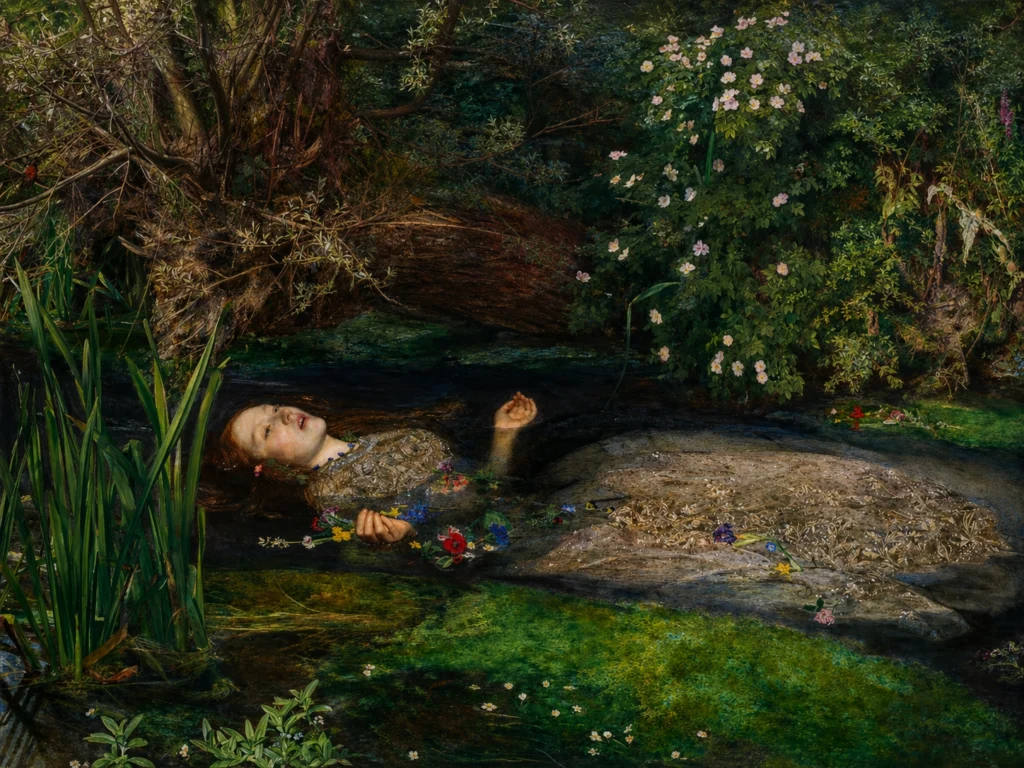
This is also one of the best places in London to understand the Pre-Raphaelites and Victorian painting more broadly. Tate’s own Pre-Raphaelite print listings specifically feature John Everett Millais’s Ophelia, one of the best-known images associated with the museum.
Why book this tour with a guide?
Because Tate Britain is much more rewarding than its tourist popularity might suggest.
This is exactly the kind of museum that can feel underwhelming if you drift through it without a plan, and unexpectedly brilliant if someone good opens it properly for you. A guide helps you see why Turner matters, why British landscape is not only landscape, why Pre-Raphaelite painting feels so different from high Victorian academic art, and how British art moves from historical grandeur into something more modern and psychologically varied.
Tate Britain is not difficult in the same way that the British Museum is difficult. It is more visually approachable. But it still becomes much stronger when the pictures are connected into a story.
What makes Tate Britain different from Tate Modern?
This should be made very clear.
Tate Britain and Tate Modern belong to the same wider Tate institution, but they are completely different museums in visitor experience and curatorial focus. Tate Britain is the older gallery and is fundamentally about British art. Tate Modern is the modern and contemporary museum. Tate itself calls Tate Britain the oldest gallery in the Tate family, while Tate Modern is presented separately through its own buildings, shops and programme.
So this page is not about modern international art. It is about British painting and British visual culture.
What you will see
A strong Tate Britain tour usually includes a carefully chosen route through the most rewarding parts of the collection, depending on your interests, what is on display that day, and how much emphasis you want on earlier, Victorian or later British art.
For many guests, the most important anchors are:
- J. M. W. Turner
- the Pre-Raphaelites
- major Victorian painting
- selected modern British works
- the wider development of British art across periods
Tate’s own Tate Britain shop pages and themed print pages strongly reflect these priorities, featuring large numbers of Turner works and key Victorian / Pre-Raphaelite pictures such as Ophelia.
Turner
Turner is one of the main reasons people come here.
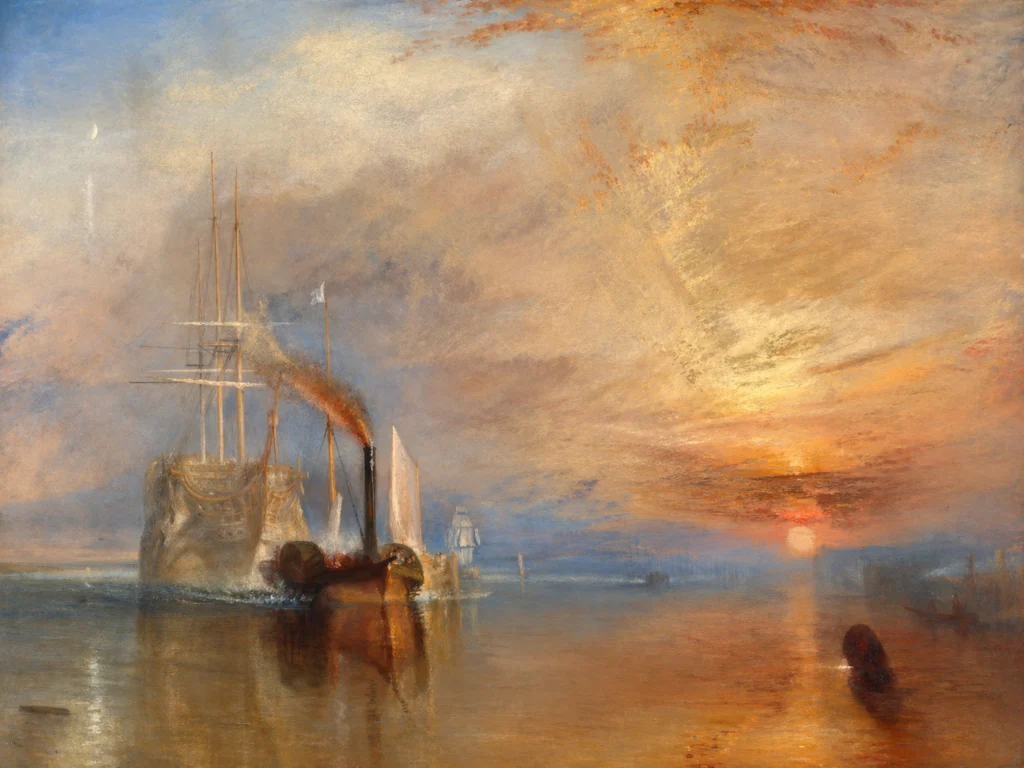
Tate’s own material repeatedly foregrounds him. The Tate shop pages for Tate Britain show multiple Turner works, and Tate also explicitly states that some of Turner’s greatest masterpieces are on display at Tate Britain.
That matters because Turner is not simply “a marine painter”, even though seascapes are central to him. He is one of the great imaginative painters in British art — landscape, weather, light, history, atmosphere, destruction, myth and transformation all flow through his work. Tate Britain is one of the best places in the world to explain why.
The Pre-Raphaelites and Victorian painting
The other major strength for many visitors is the Victorian and Pre-Raphaelite section.
Tate’s own print pages show just how strongly Ophelia by John Everett Millais remains one of the defining images associated with this world, alongside other figures such as John William Waterhouse and wider Pre-Raphaelite and Victorian names.
This part of the museum is especially rewarding because it combines:
- literature
- mythology
- theatrical emotion
- rich colour
- highly finished surfaces
- and a very British mixture of sincerity and intensity
A guide can make this material far more vivid than it first appears.
Duration
The standard tour lasts around two and a half to three hours.
That is the right balance for this museum. It is long enough to understand the major strands of the collection properly, but not so long that the visit becomes visually exhausting.
Start times
Tate’s official shop information lists Tate Britain opening hours as 10.00–18.00 daily.
Our standard guided tour timings are therefore:
- 10:00 am — morning slot
- 2:00 pm
- 2:30 pm
- 3:00 pm — afternoon slots
Morning is usually better, especially for visitors who want the strongest concentration and the clearest visual attention.
Meeting point
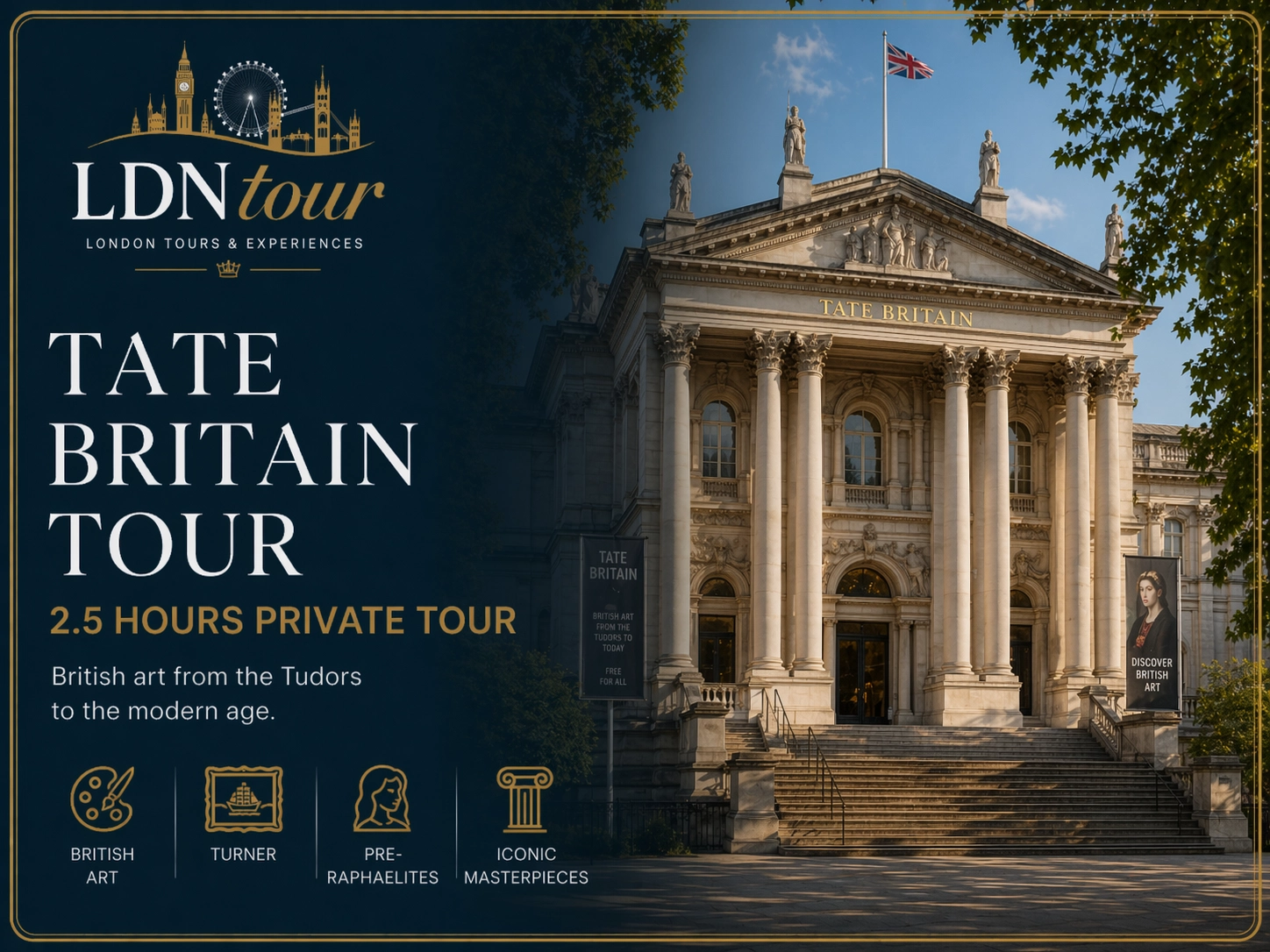
Our standard meeting point is at the bottom of the steps by the main entrance to Tate Britain.
Tate Britain’s published address is:
Tate Britain
Millbank
London SW1P 4RG
We send the exact pin after booking.
Entry and exhibitions
Entry to the main collection is free.
As with the other major Tate museums, temporary exhibitions are often ticketed separately. If there is a paid exhibition on during your dates, we can discuss whether it is worth adding to your visit. Tate membership benefits pages also confirm that exhibitions are a separate category from the permanent free collection.
In many cases, the best structure is:
- guided visit through the main collection first
- then self-guided entry into the paid exhibition afterwards
Group size
For practical guiding quality, we recommend:
- up to 20 people: one guide
- above 20 people: split into multiple groups
This is the same logic we use across the larger London museum and gallery interiors.
Tour Guide Systems
For groups of eight or more, we recommend our Tour Guide Systems.

Even in a calmer museum environment, they improve audibility, comfort and group flow, especially when moving through rooms and stopping around popular works.
We supply our own systems and can add them to your invoice.
Accessibility
Tate’s accessibility pages were not fully available in the search results I could retrieve, so I do not want to overstate details. Tate’s public-facing pages do, however, present Tate Britain as a major public gallery with visitor facilities, and the venue is widely used for public access and events.
For the site page, I would phrase this conservatively:
Tate Britain is generally suitable for wheelchair users and visitors with access needs. If anyone in your group has specific requirements, tell us in advance and we will plan the visit accordingly.
Families and children
This museum is usually less immediately exciting for younger children than the Natural History Museum or the Tower of London.
But for school-age children, teenagers, art students and families interested in British history and literature, it can be very rewarding. Tate’s own children’s publishing also treats Turner and the Pre-Raphaelites as suitable entry points for younger audiences.
Why this museum is worth adding to your London programme
Because after the major headline museums, Tate Britain gives you depth.
It is where the London museum journey begins to shift from “the essential sights” into something more interpretive and more specifically British. It is one of the strongest next-step museums for visitors who already understand the basics and now want to see how British art actually looks and feels on its own terms.
That is why, on our site, Tate Britain opens the next tier of London museum visits.
Booking process
This tour should be booked in advance.
That is because:
- the best Tate Britain guides are fewer than people assume
- paid exhibitions may need separate planning
- larger groups may need Tour Guide Systems or multiple guides
- and we may wish to shape the route around your particular interests in Turner, Victorian painting or later British art
Once you send the enquiry, we confirm the date, start time and guide availability, then issue the invoice.
Final thought
Tate Britain is not the loudest museum in London.
That is one of its strengths.
It is a museum that rewards people who are ready for a more thoughtful stage of the city’s cultural life. If you want British art explained properly — not just pointed at — this is one of the best places in London to do it.
Complete the enquiry form below to request your private Tate Britain Tour.
FAQ
Is Tate Britain free to enter?
Yes, the main collection is free to visit. Temporary exhibitions are often separately ticketed.
How long does the tour last?
Usually around two and a half to three hours.
What are your standard start times?
Usually 10:00 am, 2:00 pm, 2:30 pm or 3:00 pm.
What is Tate Britain best known for?
Above all, for British art and especially for its strong Turner holdings. Tate also repeatedly highlights major Turner works at Tate Britain.
Does Tate Britain have the Pre-Raphaelites?
Yes. Tate’s own print pages feature Ophelia by John Everett Millais and other Pre-Raphaelite / Victorian works associated with Tate Britain.
Is Tate Britain the same as Tate Modern?
No. They belong to the same wider Tate institution, but Tate Britain focuses on British art, while Tate Modern is the modern and contemporary museum.
Where do we meet the guide?
At the bottom of the steps by the main entrance to Tate Britain, Millbank, London SW1P 4RG.
Should larger groups be split?
We usually recommend splitting groups above 20 people.
Do you recommend Tour Guide Systems?
Yes, especially for groups of eight or more.
Is this museum good for children?
It can be very good for school-age children, teenagers and families interested in British art, but it is usually less immediately engaging for very young children than more interactive museums. Tate’s own children’s publishing reflects Turner and the Pre-Raphaelites as accessible educational entry points.
Is Tate Britain one of the first museums to visit in London?
Usually not. We normally place it after the five core London museum / heritage visits and after at least one major royal day trip such as Windsor, because Tate Britain works best once you are ready to go deeper into British culture.